


Humanities
Through Humanities, children explore significant historical events, people, cultures and civilisations, while developing their geographical knowledge and understanding of places, environments and the wider world. Our lessons encourage children to ask questions, investigate evidence, make connections and develop a sense of curiosity about the world around them.
What core History skills and knowledge are covered?
- Topic knowledge – investigating key figures or events from historical periods; examining how aspects of life have developed over time.
- Chronological awareness – understanding how historical periods interconnect, overlap and impact each other.
- Substantive (abstract) concepts – recurring themes, key concepts and fundamental elements of historical knowledge, such as ’empire’, ‘monarchy’ or ‘invasion and settlement’.
- Disciplinary concepts – learning how historians investigate the past and how they construct historical claims.
- Historical enquiry – experiencing the process that historians use; navigating historical concepts by questioning, investigating, interpreting, evaluating, concluding and communicating.
What core Geography skills and knowledge are covered?
- Locational knowledge – naming and locating places and features from memory; using atlases, globes and maps.
- Place knowledge – developing a sense of the children’s place in the world; comparing and contrasting geographical areas to understand their characteristics and cultures; learning how places are interconnected and change over time.
- Human and physical geography – understanding the relationship between humans and the environment; exploring the Earth’s natural features and processes; considering the impact of human activity on settlements; learning about land use, trade and natural resources.
- Geography skills and fieldwork – using maps and diagrams; describing location and direction; planning and carrying out fieldwork enquiries.
What are the benefits of this curriculum coverage for teachers?
This National curriculum coverage document clearly shows which key skills are developed in each unit across the year groups. It ensures a broad and balanced Geography curriculum, giving children varied experiences with the fundamentals.
Curriculum Map
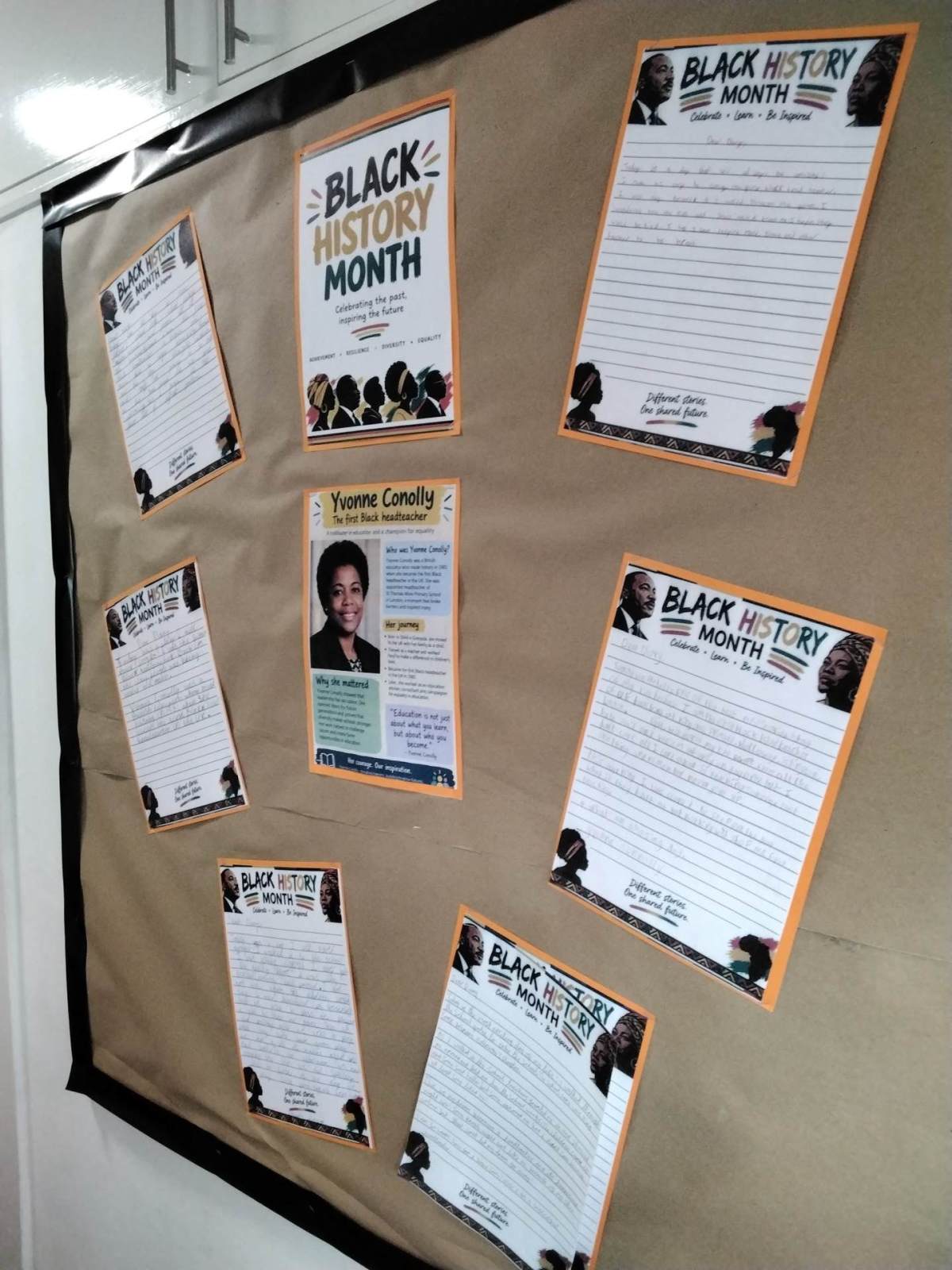
Black History Month
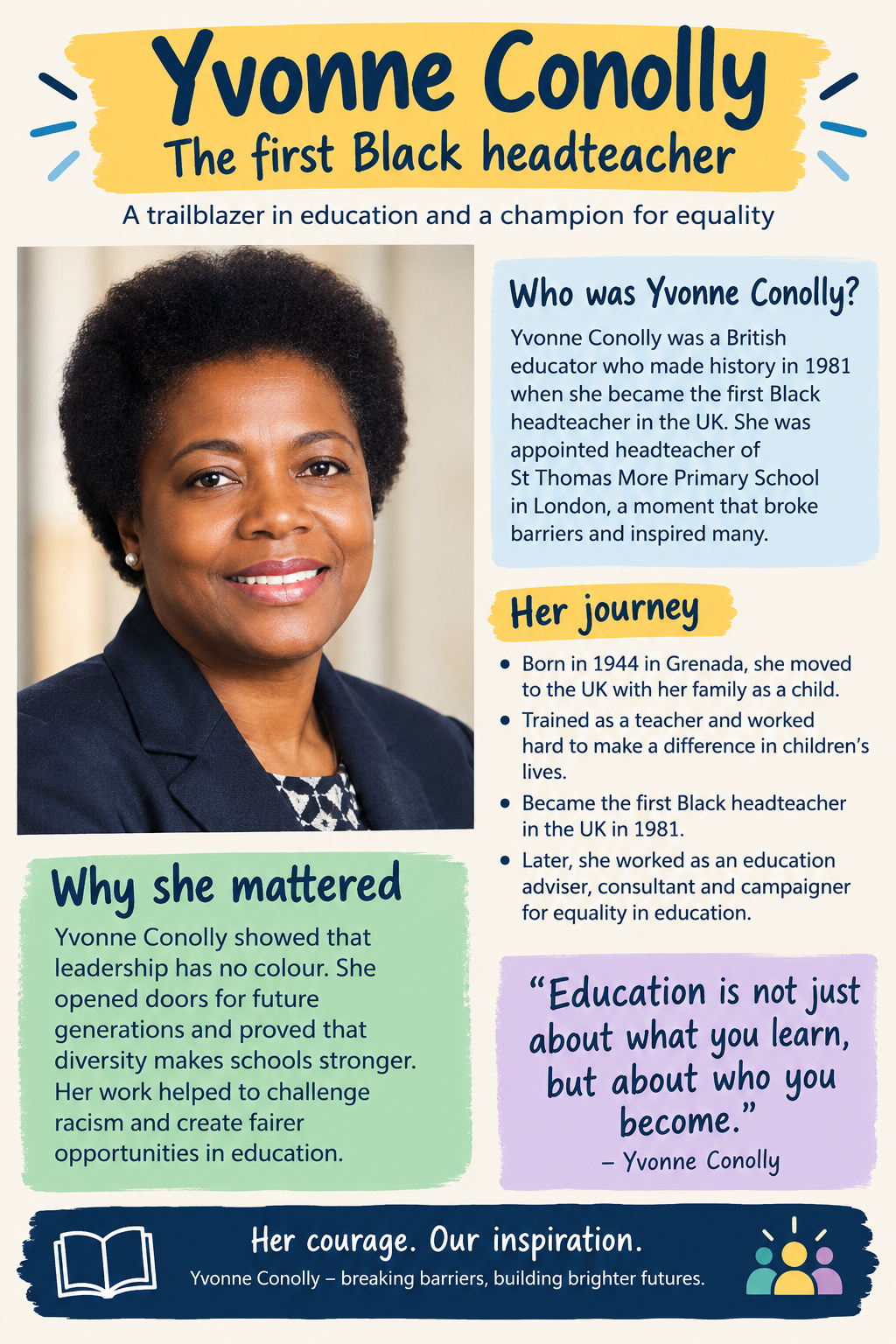
During Black History Month, Oak Class learned about Yvonne Connolly, the first Black headteacher in the UK. The children explored her achievements, the challenges she faced and the importance of equality, diversity and representation in education. They discussed how Yvonne helped break down barriers and why it is important to celebrate inspirational people who have made a difference in society.
 |
 |